I often think one of the biggest advantages I’ve had in my career came long before I was producing technical drawings or sitting in design meetings with landscape architects. It came from building playgrounds with my own hands. For several years I worked for Apes At Play, constructing bespoke timber playgrounds directly on site. Unlike many projects today, we weren’t simply installing equipment that had been manufactured elsewhere. We were creating spaces within the landscape, often adapting details as we built to make the most of the given budget and space. Looking back, the biggest lesson wasn’t learning just how to build. It was what happened when the children arrived.
Very quickly, one thing became obvious. Children never play the way adults expect them to.
No matter how much thought had gone into a structure, children would almost immediately discover something we hadn’t considered. They’d invent new routes, create games we’d never imagined or find completely different ways of using the space. Sometimes, rather alarmingly, they’d also discover the engineering limits of a structure. If there was a roof that wasn’t intended to be climbed, someone would climb it. You could almost guarantee that within minutes everyone else wanted to follow. As designers we spend a lot of time thinking about ‘expected use’, safety sat behind the screens our our computers. Children don’t. They’re curious, inventive and constantly testing boundaries because that’s simply part of how they play. That experience has stayed with me ever since and still influences how I think about playground design today.
One memory in particular has never left me. I went back to photograph a completed project, expecting to capture children enjoying the playground we’d spent months designing and building. Instead, most of them weren’t on the equipment at all. They’d grouped together on the grass embankments, rolling down the hills we’d created as part of the landscape. It was a subtle reminder that the landscape itself can be just as playful as any structure we build.

I think that’s one of the reasons our conversations with landscape architects have changed over the years. Of course we still spend time discussing the equipment, but we’re just as likely to be talking about topography, planting, shade, circulation routes and where people naturally want to gather. The playground has become one element within a much broader landscape, rather than the sole focus of it.
It’s also changed the way we think about the structures themselves. We’re often asked to design pirate ships, castles or other themed play equipment. Occasionally that’s exactly the right solution, but more often we encourage clients to think about what they’re really trying to achieve. A child doesn’t arrive at school wanting to play pirates every lunchtime. They arrive wanting to invent, explore, create games and make the space their own. That’s why we tend to favour more abstract forms. A structure with character doesn’t need to tell a child what it is. One day it might become a ship, the next a spaceship, a fortress or somewhere completely different. By leaving room for imagination and being less proscribed, children create their own stories rather than acting out one that adults have already written for them.
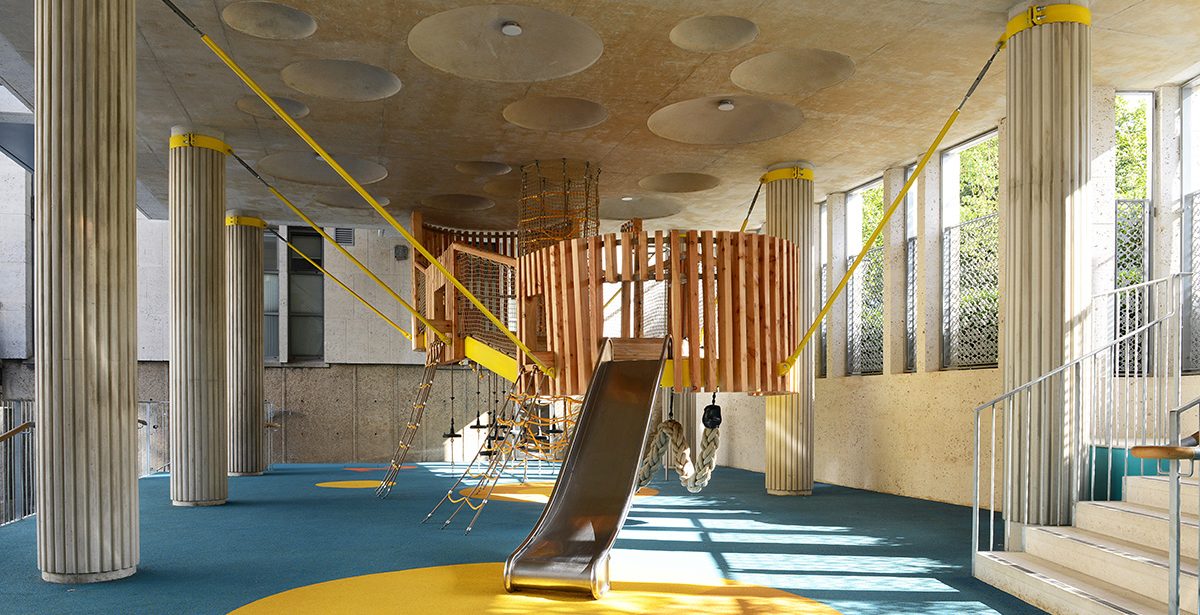
A good example of this was our project at St Paul’s School. Early in the design process, the idea was to create a pirate ship. As the project evolved, so did the design. What emerged wasn’t a literal ship but a sculptural timber play structure that could be interpreted in countless different ways. It still captured a sense of adventure, but it didn’t dictate how children should play. In my experience, that’s where some of the richest play experiences begin.
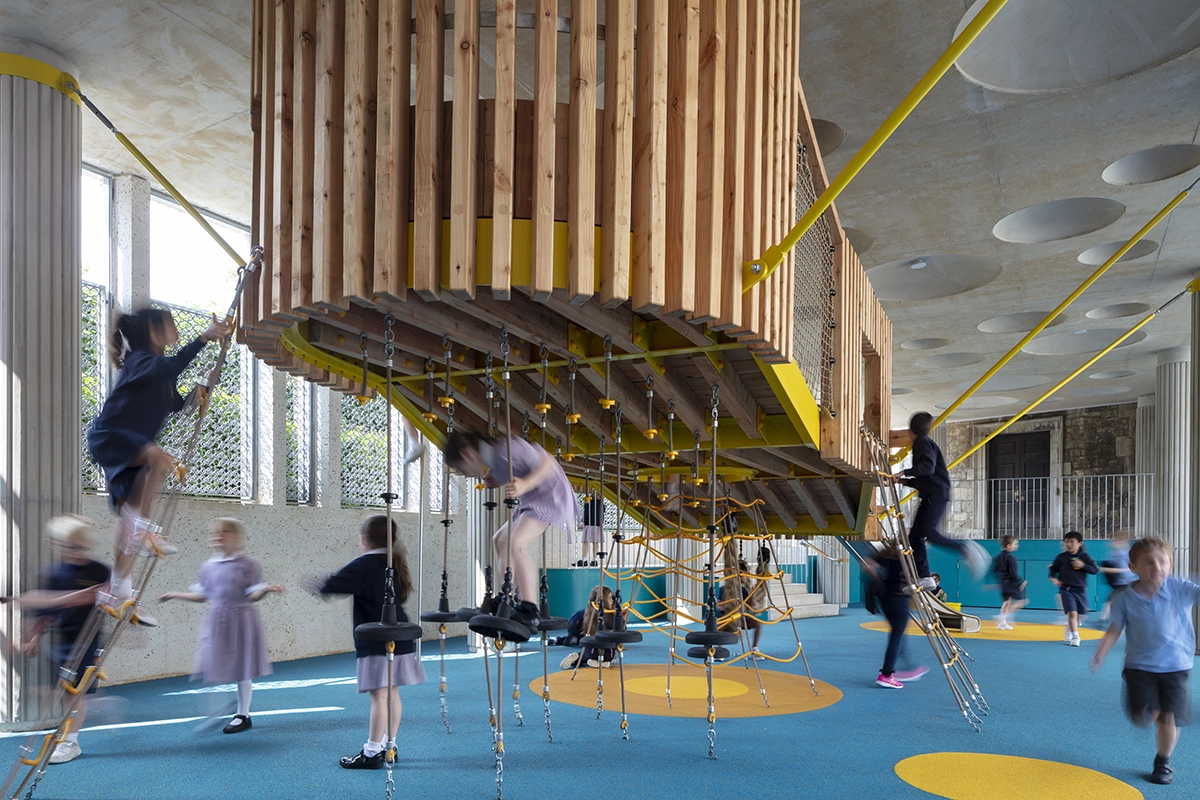
I don’t think there’s a right or wrong answer to playground design, and every project is different. But having spent years building playgrounds, watching children use them and now designing them, I’ve become convinced of one thing. We can draw every line, calculate every load and carefully consider every detail, but the moment children arrive they’ll show us possibilities we never imagined.
And perhaps that’s exactly what good play should do.

 (+44) 0177 383 0069